October 21, 2026 | Buying
Buying a Historic Home in Dundas: What Should You Investigate Before Making an Offer?
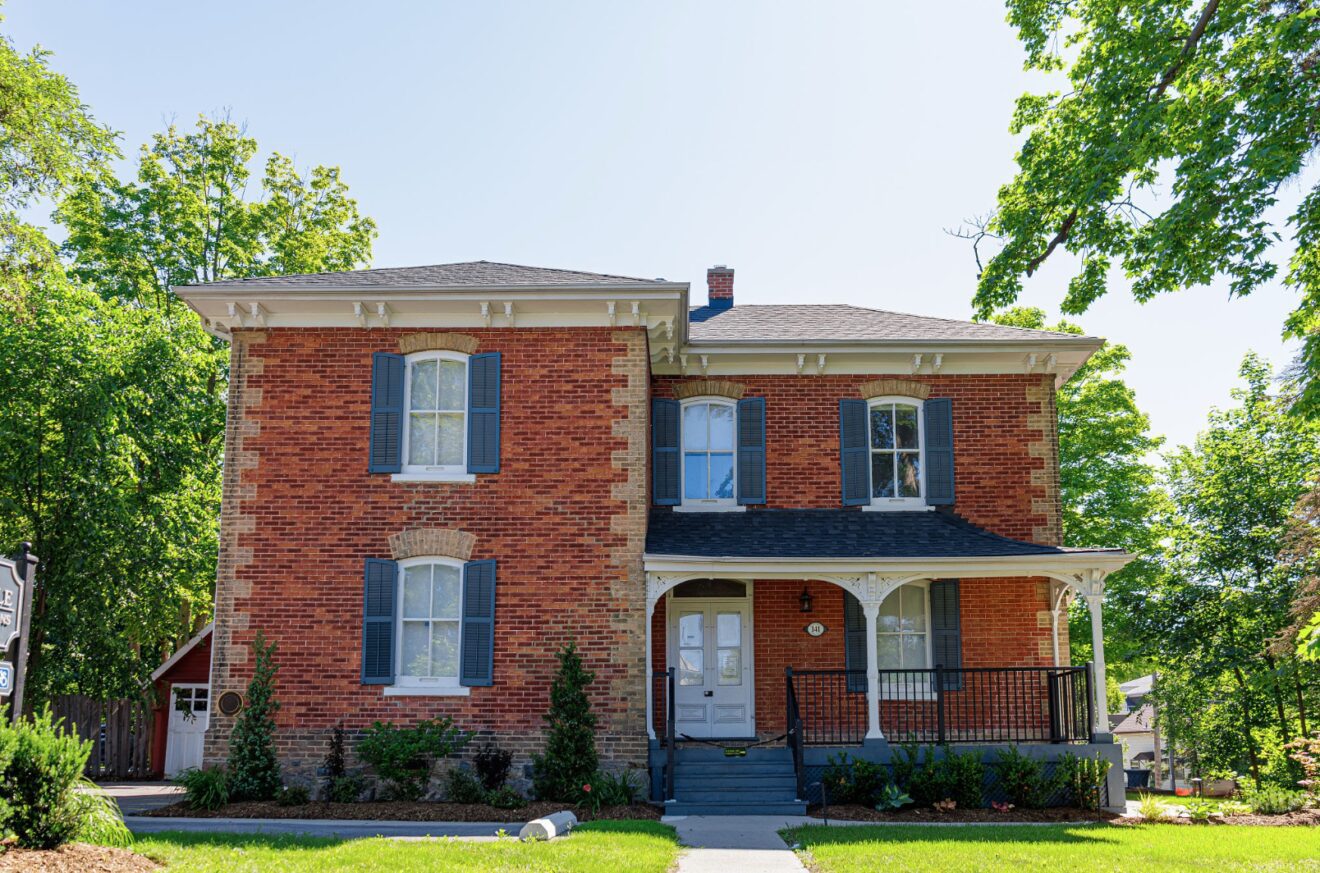
Dundas has a quality that is increasingly difficult to find in newer residential communities. Its historic streets, distinctive architecture and connection to the surrounding landscape give the town a character that has developed over generations.
For buyers attracted to older homes, that history is often part of the appeal.
Original woodwork, traditional brick and stone construction, high ceilings and architectural details that have survived for more than a century can make these properties especially compelling.
But the same age that gives a historic home its character can introduce challenges that buyers may not encounter in newer construction.
Luke O’Reilly, Founder & Broker of The O’Reilly Group with Royal LePage State Realty, with more than 16 years of residential real estate experience in Hamilton, Dundas and Ancaster, believes the most important consideration is understanding the property beyond its appearance.
His advice is straightforward: ‘Do your research and understand exactly what you’re walking into.’
That means investigating not only the home’s condition but also the financial and practical implications of maintaining, renovating and eventually reselling it.
What should buyers investigate when purchasing a historic home in Dundas?
Buyers considering a historic or century home in Dundas should investigate its structural condition, electrical and plumbing systems, sewer infrastructure, roofing, foundation, moisture history and potential hazardous materials. They should also verify heritage designation, understand any renovation restrictions and consider how local geography, including bedrock and nearby waterways, could affect future improvements.
The goal is to identify potential problems, understand their costs and determine whether the property aligns with the buyer’s long-term plans.
Debating between Dundas and nearby communities? Give this blog a read:
The First Challenge: Understanding What Lies Behind the Walls
A century home may have been renovated several times over its lifetime.
Some improvements may have been completed professionally, with permits and supporting documentation. Others may have been undertaken decades ago, using materials and construction practices that are no longer common.
And in certain cases, significant portions of the original infrastructure may remain.
For O’Reilly, this makes the investigation of structural and mechanical systems one of the first priorities.
During his interview, he identified several issues that buyers should consider, including older plumbing materials, knob-and-tube wiring, asbestos, vermiculite insulation, structural movement and specialized roofing systems.
These concerns don’t necessarily mean a property is unsuitable for purchase. They do, however, raise questions about the home’s current condition and the potential costs of ownership.
Why a Renovated Interior Doesn’t Necessarily Mean Updated Infrastructure
A beautifully renovated kitchen or bathroom can create the impression that an older home has been comprehensively modernized.
But cosmetic improvements don’t necessarily reveal what has happened behind the walls.
An updated electrical panel, for example, doesn’t establish that every circuit throughout the home has been rewired.
Similarly, new plumbing fixtures don’t necessarily mean the supply and drainage systems have been replaced.
Buyers need to understand the extent of previous renovations rather than assuming that visible improvements extend throughout the property.
This is particularly relevant when evaluating homes that have undergone several generations of alterations.
The question isn’t simply whether the property has been updated.
It’s which components have been updated, when the work was completed and what remains original.
Knob-and-Tube Wiring: An Insurance Issue as Well as a Renovation Consideration
One of the more consequential discoveries in an older home can be active knob-and-tube wiring.
This electrical system was commonly installed in Canadian homes during the early twentieth century. While its presence doesn’t automatically mean the wiring is unsafe, its condition and suitability for modern electrical demands require professional assessment.
The Electrical Safety Authority explains that some insurers may decline coverage or require replacement of knob-and-tube wiring before issuing a policy.
The authority recommends having a licensed electrical contractor assess the system’s condition. ESA Safe
O’Reilly highlighted the practical consequences during his interview.
A buyer may discover that obtaining satisfactory insurance requires more extensive electrical work than anticipated. Depending on the property’s existing infrastructure, that work could include rewiring portions of the home and upgrading the electrical service or panel.
But the financial implications may extend beyond the electrical work itself.
Older homes frequently contain plaster walls and ceilings. Accessing concealed wiring may require openings that subsequently need to be repaired.
The result can be a project involving electricians, plaster repairs, painting and other restoration work.
What Should Buyers Do Before Purchasing?
The appropriate starting point is to determine whether older wiring remains active.
If there is uncertainty, buyers should consider having a licensed electrical contractor conduct a dedicated assessment.
They should also discuss the property’s electrical condition with their insurance provider before completing the purchase.
This can help establish whether the home is insurable in its current condition and whether improvements will be required.
An important distinction is that the existence of knob-and-tube wiring and the condition of that wiring are separate questions. Neither should be determined solely from the age of the house.
The Underground Problem That Buyers Often Overlook
Some of the most expensive problems associated with older properties are completely invisible during a showing.
Underground sewer infrastructure is a particularly important example.
Historic homes may still have older clay sewer pipes that have deteriorated over time.
These pipes can crack, separate, shift or collapse. Tree roots may also enter through joints or damaged sections.
When problems develop, they can interfere with drainage and, in more serious circumstances, cause sewage backups or sewer gas concerns.
For O’Reilly, this issue is more than a professional observation.
It’s something he has experienced as a homeowner.
A Costly Lesson From a Home Built in 1906
O’Reilly‘s own home was constructed in 1906.
During his ownership, portions of the underground sewer infrastructure collapsed, requiring excavation and replacement work.
The project involved the sewer connection running from the home toward the street, with work affecting both privately owned and municipal portions of the infrastructure.
It was an expensive undertaking.
The experience illustrates a problem with buying older homes: significant deficiencies can exist in areas that are impossible to evaluate through a conventional visual inspection.
A property may appear well maintained above ground while important infrastructure beneath it is approaching the end of its useful life.
And unlike cosmetic improvements, a failed sewer line may demand immediate attention.
Why a Sewer Camera Inspection Can Be Worthwhile
A sewer camera inspection allows a qualified professional to examine the interior of an accessible underground drain line.
Depending on the system and inspection conditions, it may identify fractures, displaced sections, root intrusion, blockages and other visible deficiencies.
The City of Hamilton’s guidance on sewer laterals confirms that older service lines can be affected by deterioration, ground settlement and tree roots.
The City also explains that property owners are responsible for maintaining the entire lateral and repairing its private portion. Certain public-side repairs may qualify for assistance through the City’s Sewer Lateral Management Program. City of Hamilton
O’Reilly‘s experience reinforces the value of investigating this infrastructure before purchasing.
A camera inspection cannot eliminate the possibility of future problems, but it can provide information that would otherwise remain unavailable to the buyer.
For a property with an older sewer connection, the cost of obtaining that information may be relatively small compared with the potential expense of excavation and replacement.
🔍 Planning to sell before buying your next historic home? Preparing early can prevent costly surprises during buyer due diligence. Read our guide:
Why Dundas Geography Can Complicate Basement Renovations
One of the more distinctive considerations when purchasing a historic home in Dundas has little to do with the home’s architecture.
It has to do with what’s underneath it.
O’Reilly points to bedrock as an important consideration in parts of the historic downtown core.
Some older properties have relatively shallow basements, and buyers may be tempted to view these spaces as opportunities for additional finished living areas.
Lowering a basement floor or underpinning a foundation might appear to be a logical way to increase usable space.
However, where bedrock is present, the work can become considerably more complicated.
Excavation may require specialized equipment and techniques. Depending on the existing foundation, structural engineering and underpinning may also be necessary.
These factors can significantly affect the project’s feasibility and cost.
A Renovation Plan Should Be Investigated Before It Becomes Part of the Purchase Decision
Imagine a buyer considering a historic Dundas home with an unfinished basement.
The main and upper floors meet their needs, but they envision converting the basement into a family room, home office or guest accommodation.
That additional space may influence what they’re prepared to pay for the property.
Yet if the basement contains shallow bedrock, the proposed renovation could be substantially more expensive than anticipated.
O’Reilly recommends involving the appropriate professionals before making assumptions about what can be accomplished.
Depending on the project, that may include a structural engineer, architect and contractor with experience renovating older properties.
A Realtor familiar with the local housing stock can help buyers recognize when these questions deserve further investigation.
The distinction is important.
A renovation may be technically possible without being financially sensible.
And buyers should understand that difference before incorporating the proposed improvement into their long-term plans.
Structural Movement: Understanding the Difference Between Age and a Serious Problem
Older homes often show evidence of movement.
Uneven floors, cracks in plaster and other irregularities may have developed gradually over many decades.
These observations don’t automatically indicate a serious structural defect.
But they shouldn’t be dismissed without investigation either.
O’Reilly identified structural shifting as another issue buyers should be aware of when evaluating historic properties.
The challenge is determining whether an observed condition reflects ordinary age-related movement or something that requires corrective work.
A crack in a plaster wall, for example, could have several explanations.
The same is true of a sloping floor.
Without understanding the home’s structure and the history of the condition, buyers may struggle to assess its significance.
A qualified home inspector can provide an initial assessment and identify circumstances that warrant additional investigation.
Where potentially significant structural concerns exist, a structural engineer may be appropriate.
Why the Foundation Deserves Particular Attention
The foundation is especially important when evaluating an older home.
Historic properties may have been constructed using stone, brick or other foundation systems that differ from modern poured-concrete construction.
Their condition, maintenance history and exposure to moisture can influence both immediate repair requirements and future renovation possibilities.
For buyers considering basement finishing or excavation, the foundation’s characteristics become even more significant.
An appropriate assessment should consider not only whether the structure is performing adequately today, but also whether the buyer’s proposed improvements are practical.
Specialized Roofing Materials Can Change the Economics of Ownership
A historic home’s roof can be one of its most distinctive architectural features.
Slate roofing is an example O’Reilly specifically raised during his interview.
Slate can be a durable and attractive roofing material, but maintaining or replacing it may require specialized expertise.
The cost of working with traditional roofing materials can differ substantially from the cost of replacing conventional asphalt shingles.
For buyers, this introduces another layer of financial planning.
It’s not enough to establish that a roof is currently functioning.
They should also understand its age, condition, maintenance history and the potential cost of future repairs.
A specialized roofing contractor may be needed to provide a reliable assessment.
This is especially relevant when the roof contains unusual materials or architectural details that the owner wishes, or may be required, to preserve.
A historic roof can contribute significantly to a property’s character.
Preserving that character may also involve a greater financial commitment.
Older Plumbing and Potential Hazardous Materials
Electrical wiring and sewer infrastructure are not the only systems that deserve attention.
O’Reilly also identified older plumbing materials and potentially hazardous building products as important considerations.
Depending on the home’s construction and renovation history, buyers may encounter lead or cast-iron piping, asbestos-containing materials or vermiculite insulation.
Each presents different questions.
Older plumbing may require evaluation for deterioration, performance or material-related concerns.
Potentially hazardous materials may require professional testing or assessment, particularly if the buyer intends to renovate.
The important distinction is between the presence of a material and the actual risk it presents.
Not every older material requires immediate removal.
However, disturbing certain materials during renovations can create health and safety concerns and introduce additional costs.
Renovation Budgets Need to Account for What Might Be Discovered
Consider a buyer planning to renovate a kitchen in a century home.
The visible work may appear relatively straightforward: new cabinetry, countertops, appliances and flooring.
But once the walls or floors are opened, the contractor may discover outdated wiring, aging plumbing or materials requiring specialized handling.
The project can quickly expand beyond its original scope.
This is why renovation estimates for older homes should be approached carefully.
A buyer should understand which assumptions underpin the estimate and whether the contractor has accounted for the possibility of concealed conditions.
Where concerns exist, specialized assessments can help clarify the risks before work begins.
Heritage Designation: What Are You Actually Allowed to Change?
Historic character and formal heritage protection are not the same thing.
A home can be more than a century old without being designated under the Ontario Heritage Act.
Conversely, a property’s formal heritage status can affect the types of alterations its owner is permitted to undertake.
O’Reilly considers this an important distinction for buyers, particularly those purchasing with plans to renovate, expand or redevelop a property.
A buyer might be attracted to a historic home while also envisioning substantial changes to accommodate modern living.
But the property’s heritage status could influence which changes are possible and what approvals are required.
Designated and Listed Properties Are Not the Same
The City of Hamilton’s Municipal Heritage Register distinguishes between formally designated properties and non-designated properties identified as having potential cultural heritage value.
A non-designated property appearing on the municipal register is not subject to the same heritage permit requirements as a designated property, although other planning considerations may apply.
For individually designated properties, alterations affecting protected heritage attributes generally require municipal consent.
Properties within designated heritage conservation districts may also be subject to heritage permit requirements for exterior alterations.
The City of Hamilton’s Heritage Permits guidance explains the applicable process and encourages owners to consult municipal staff early when planning changes.
Why This Matters Before Buying
Consider two otherwise similar century homes.
One has no formal heritage designation.
The other is individually designated, with specific architectural features protected under a municipal bylaw.
Both may require ordinary building permits for certain renovations.
But the designated property may also require heritage approval for work affecting its protected attributes.
That could influence the feasibility, timing and cost of a proposed project.
Heritage designation does not necessarily prevent renovations or additions. Ontario’s heritage framework allows alterations to be considered through an approval process. Ontario
Nevertheless, buyers should understand the property’s status before purchasing.
For O’Reilly, the broader consideration is how much flexibility the owner will have to make changes in the future.
A buyer intending to preserve a property’s existing character may view heritage protection differently from someone hoping to undertake substantial alterations.
Neither perspective is inherently right or wrong.
The important thing is ensuring that the property’s legal and planning circumstances align with the buyer’s intentions.
🏙️ New to the region? Explore local community highlights in our article:
Creeks, Streams and Flooding: Understanding the Land Around the Home
One of O’Reilly‘s final observations during the interview concerned an aspect of Dundas that can easily be overlooked when evaluating a historic property.
Water.
Dundas is surrounded by distinctive natural features, including the Niagara Escarpment, valley lands and waterways.
O’Reilly noted that the community contains numerous smaller creeks and streams, making it important for buyers to investigate the surrounding geography.
A property’s relationship to nearby waterways, groundwater and drainage patterns can affect its susceptibility to moisture problems.
This becomes especially important when evaluating older foundations and basements.
Why Water History Matters
A basement that appears dry during a showing may still have experienced water penetration during previous seasons or significant rainfall events.
Buyers should investigate whether the property has a history of flooding, seepage or drainage problems.
They should also consider whether nearby properties or streets have experienced flooding.
The presence of a creek or stream doesn’t automatically mean a property is at risk.
Similarly, the absence of a nearby watercourse doesn’t guarantee that a basement will remain dry.
Flooding and moisture problems can arise from several sources, including surface runoff, groundwater infiltration and sewer backups.
The City of Hamilton provides guidance on these different causes and on measures homeowners can take to reduce their exposure.
Why the Water Table Can Matter
O’Reilly also raised the importance of understanding groundwater conditions.
This can be especially relevant for buyers considering basement excavation or finishing.
If groundwater conditions create additional challenges, proposed improvements may require more extensive drainage, waterproofing or engineering work.
Buyers should avoid assuming that a basement can be safely lowered or finished without understanding the property’s existing moisture conditions.
Where appropriate, a qualified professional can assess drainage concerns, while conservation authority mapping and municipal records may help identify broader flood-related considerations.
The practical lesson is to evaluate the property as part of its surrounding environment.
The home itself may be the focus of the purchase, but the land around and beneath it can have an equally important influence on long-term ownership.
The Financial Reality of Owning a Century Home
The appeal of a historic property is often emotional.
A buyer may appreciate the craftsmanship, the sense of history or the individuality of a home that looks unlike anything being built today.
Those qualities can be meaningful.
But O’Reilly believes buyers also need to recognize the financial commitment that can accompany older-home ownership.
During the interview, he described maintaining a historic home as ‘an ongoing labor of love.’
It’s an observation that captures an important distinction between admiring an older property and owning one.
A historic home may require continued attention to systems and materials that have been in place for generations.
Certain repairs may involve specialized contractors.
Renovations may reveal conditions that weren’t apparent beforehand.
And improvements that would be relatively straightforward in newer construction can become more complicated when traditional materials or structural systems are involved.
Maintenance Should Be Part of the Purchase Budget
Buyers should consider more than the purchase price, mortgage payments, property taxes and insurance.
They should also evaluate the condition of major building components and anticipate future maintenance expenses.
A property with a recently replaced roof, modernized electrical system and updated plumbing may present a different financial picture from a similarly priced home where those components remain largely original.
This doesn’t necessarily mean one property is better than the other.
It means their ownership costs may differ.
Buyers should assess whether they have the financial flexibility to manage both expected maintenance and unexpected repairs.
The same principle applies to renovation plans.
A buyer who intends to make extensive improvements should account for the possibility that additional work may become necessary once construction begins.
A realistic budget should reflect the property’s actual condition and the uncertainty associated with concealed building components.
Why the Right Professional Advice Matters
Purchasing a historic home involves several overlapping areas of expertise.
A Realtor can help a buyer understand the local housing market, evaluate comparable properties and recognize considerations that may influence the purchasing decision.
But a Realtor isn’t a structural engineer, electrician, plumber or environmental consultant.
O’Reilly emphasizes the value of consulting professionals who understand the particular challenges associated with older homes.
For a buyer considering a property in Dundas, that might involve a general home inspector alongside specialized assessments of electrical systems, sewer infrastructure, structural conditions or proposed renovations.
The appropriate level of investigation depends on the property.
A well-maintained century home with extensive documentation of recent improvements may raise different questions from a property that has undergone limited modernization.
Similarly, a buyer intending to preserve a home in its current configuration may have different priorities from someone planning substantial renovations.
The objective is to match the due diligence to the property and the buyer’s intentions.
The Value of Local Experience
Local knowledge can help identify questions that might otherwise be overlooked.
For example, familiarity with older Dundas properties may prompt an early conversation about bedrock before a buyer commits to a basement excavation project.
Experience with older sewer systems may lead to a recommendation for a camera inspection.
Knowledge of the community’s heritage properties may prompt an investigation into designation status before the buyer develops plans for exterior alterations.
These considerations are particularly valuable when they arise early enough to influence the purchase decision.
Once a buyer owns the property, the available options may be more limited.
Is Buying a Historic Home in Dundas Worth It?
For the right buyer, a historic home can offer something genuinely special.
Dundas has an architectural character and sense of place that have developed over generations.
Its older homes are an important part of that identity.
But purchasing one requires an appreciation for more than its appearance.
Buyers need to understand the home’s physical condition, the costs of maintaining its systems, the limitations that may apply to future renovations and the influence of the surrounding geography.
O’Reilly‘s perspective is shaped by both his professional experience and his own ownership of a home dating to 1906.
His message isn’t that buyers should avoid historic properties.
It’s that they should approach them with realistic expectations.
A century home may be an exceptional place to live, but it can also demand patience, financial flexibility and a willingness to maintain features that have already survived for generations.
The right purchase begins with understanding the home as it exists today, rather than simply imagining what it could become.
For buyers considering historic properties in Dundas, The O’Reilly Group can help evaluate available homes, identify property-specific questions and coordinate the appropriate professional investigations before making a purchasing decision.
Continue Reading
If you’re exploring real estate options across Dundas and the Greater Hamilton area, check out these related posts:
- 🏡 Ancaster Vs. Dundas: What’s Better For Your Family?
- 🔍How to Prepare for a Home Inspection Before Listing
- 🏙️ New to Hamilton? Where and What You Need to Know

We're On Your Side
Whether you’re selling or buying the O’Reilly Group is dedicated to elevating your real estate experience.