November 19, 2026 | Community: Hamilton
Living in Durand, Hamilton: Historic Homes, Remarkable Architecture and a Neighbourhood Unlike Any Other
There are neighbourhoods people discover while searching for a home, and there are neighbourhoods people go out of their way to explore simply because they enjoy being there.
Hamilton‘s historic Durand neighbourhood belongs to the latter category.
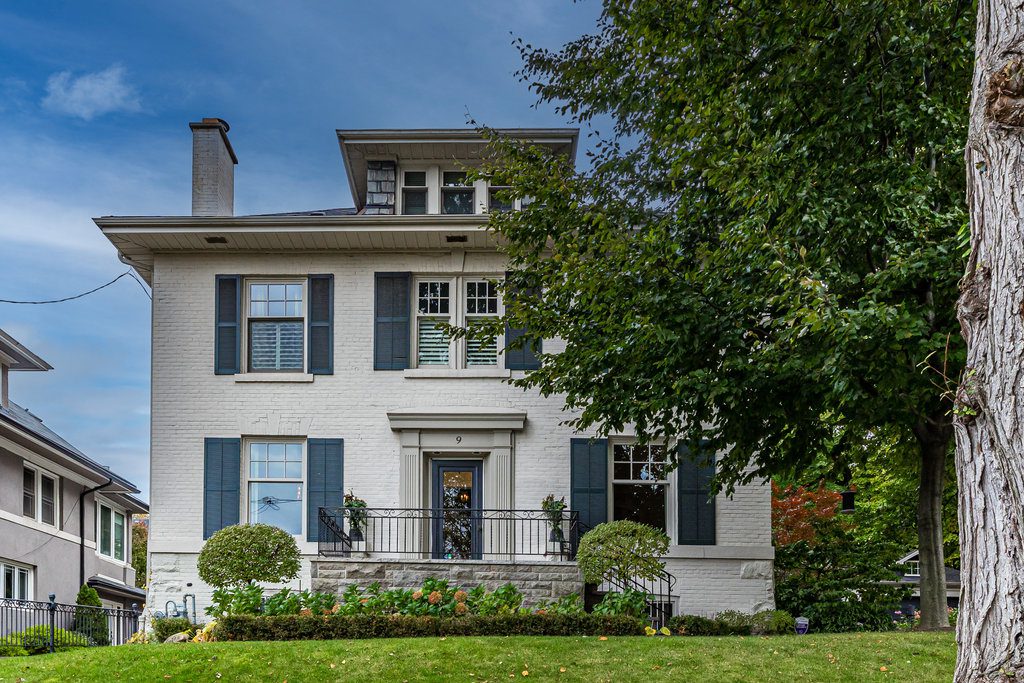
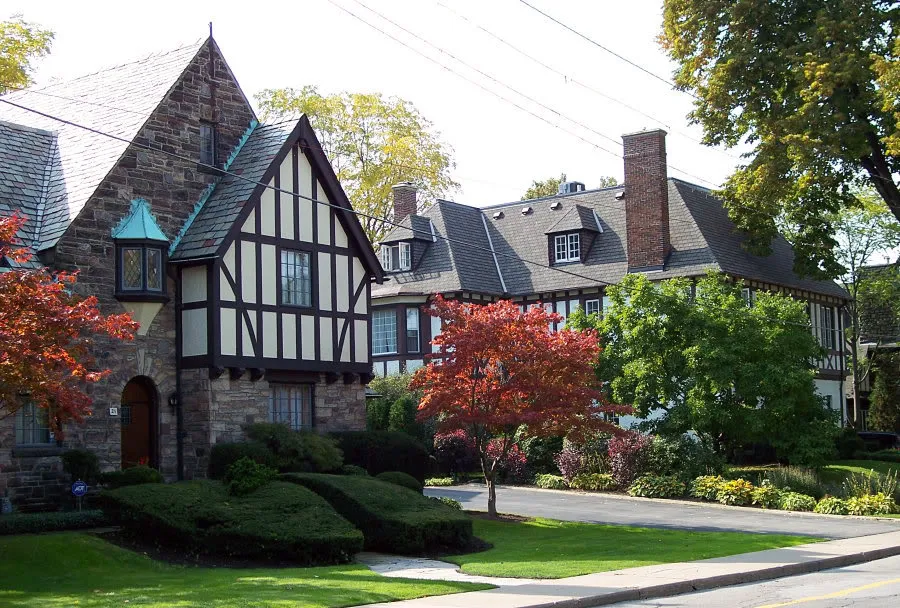
Just south of downtown, beneath the Niagara Escarpment, Durand contains some of the city’s most distinctive residential architecture. Grand nineteenth-century estates stand behind mature trees and established gardens. A few blocks away, traditional brick houses, row homes, converted residences and condominium buildings offer a different interpretation of urban living.
For Luke O’Reilly, Founder and Real Estate Broker of The O’Reilly Group at Royal LePage State Realty, Durand has always represented something more personal than an attractive collection of properties.
His grandparents lived in the neighbourhood beginning in the 1970s, and he spent time there throughout his childhood. Decades later, his real estate career has brought him back to many of the same streets, representing both buyers and sellers.
That combination of personal history and professional experience has shaped his appreciation for an area he considers among Hamilton’s finest places to live.
“I would personally live in the Durand neighbourhood without thinking twice,” O’Reilly says. “I love the area.”
But understanding Durand requires looking beyond its impressive architecture. The neighbourhood changes considerably from one end to the other, and those differences influence everything from housing choices and lifestyle to the prices buyers can expect to pay.
Where Is Hamilton’s Durand Neighbourhood?
Durand occupies a historic section of lower Hamilton, bounded by Main Street West to the north, James Street South to the east, Queen Street South to the west and the Niagara Escarpment to the south.
These boundaries are recognized by both the City of Hamilton and the Durand Neighbourhood Association.
Its location is one of its defining advantages. Residents are close to downtown Hamilton, the Hamilton GO Centre, restaurants and independent businesses along James Street, the Locke Street shopping district in neighbouring Kirkendall, and several major healthcare facilities.
For those who commute by car, Highway 403 is readily accessible. For those who prefer walking, cycling or public transportation, Durand offers alternatives that are not always available in more suburban parts of Hamilton.
Yet proximity alone does not explain the neighbourhood’s appeal.
O’Reilly points to the combination of architecture and central convenience as something that makes Durand particularly distinctive.
“People will drive through the southern Durand neighbourhood just to look at the properties and homes because they’re so stunning and beautiful,” he explains. “I think the combination of those unique, beautiful properties with easy access to all the amenities and being centrally located is something that is very attractive for residents.”
A Neighbourhood Shaped by Hamilton’s Early History
Durand’s architectural character is closely connected to Hamilton’s development as an industrial and commercial centre during the nineteenth century.
According to the City’s historical planning research, the elevated land beneath the Niagara Escarpment was particularly attractive for early farms and estate development. From the 1840s onward, prominent merchants and industrialists established substantial residences in the area.
Among the early estates identified in municipal research were Wesanford, Amisfield, Inglewood and Ballinahinch.
At the same time, more modest brick residences and cottages were developing elsewhere in the neighbourhood. Apartment construction and residential infill during the twentieth century added further variety.
The result is a neighbourhood whose architecture tells the story of several different periods in Hamilton’s history.
It is also a history that residents have worked to preserve.
Established in 1972, the Durand Neighbourhood Association has advocated for the area’s natural and built heritage for more than five decades. The City’s heritage inventory work subsequently identified hundreds of properties of potential heritage interest, reinforcing the importance of Durand’s historic building stock.
Today, the Durand-Markland Heritage Conservation District provides formal protection to a designated portion of the neighbourhood. Not every property in Durand carries the same heritage status, however, and buyers considering significant alterations should investigate the designation and applicable requirements of an individual address.
For O’Reilly, that history is not simply an interesting feature to mention during a showing. It is part of what makes the neighbourhood meaningful.
His family’s connection stretches back generations, and his childhood experiences give him a perspective that extends beyond property specifications or recent sales.
Some of the streets he particularly appreciates include Hess Street South, Ravenscliffe Avenue, Turner Avenue, Bay Street South, Inglewood Drive, Undercliffe Avenue, Aberdeen Avenue, St. James Place, Chilton Place, Markland Street and Hilton Street.
Together, they illustrate the range of settings, architecture and residential experiences that can be found within Durand.
Durand South vs. Central and North Durand: Understanding the Differences
One of the most important things prospective buyers should understand is that Durand is not a uniform neighbourhood.
Its southern residential streets, particularly around Aberdeen Avenue and toward the Niagara Escarpment, offer a noticeably different setting from the more urban streets closer to Main Street and City Hall.
“On the southern end of the Durand neighbourhood, it’s very quiet. It’s a lot of local traffic,” O’Reilly explains. “You can be right in the middle of the city and hear no traffic noise around you. It’s extremely peaceful and has an exclusive feel to it.”
Moving north, the neighbourhood gradually becomes busier, with a greater mix of property types and more visible urban activity.
“The feel does change as you get further north in the Durand neighbourhood, closer to City Hall,” he says.
That distinction matters because two buyers searching for a home in Durand may have entirely different priorities.
One may be seeking a substantial detached heritage residence surrounded by mature landscaping. Another may value a centrally located condominium, walkability and reduced maintenance responsibilities.
Both can find compelling opportunities in Durand, but they may be looking at very different parts of the neighbourhood.
| <br> | Southern Durand | Central and Northern Durand |
| Housing | Larger historic detached homes, estates and character properties | Detached homes, row homes, multifamily buildings, apartments and condos |
| Streetscape | Mature trees, larger lots and quieter residential streets | More varied streetscapes and greater urban activity |
| Lifestyle | Privacy and historic residential surroundings | Convenience, walkability and proximity to downtown |
| Pricing | Often the higher end of the local market for substantial detached properties | Broader range of housing types and entry prices |
| Buyer considerations | Heritage, maintenance, lot size and property-specific condition | Building quality, condo fees, parking, traffic and location |
These are general neighbourhood observations, not fixed geographic or price categories. Individual streets and properties vary.
The Appeal of Southern Durand: Privacy in the Middle of the City
There is something unusual about finding substantial, secluded residential properties within such close proximity to a downtown core.
Along portions of Ravenscliffe Avenue, Inglewood Drive, Turner Avenue and neighbouring streets, mature foliage extends over the roadway. Large setbacks, landscaped grounds and the escarpment backdrop help create a residential environment that can feel removed from the surrounding city.
“Durand South is extremely private. It’s quiet, the properties are generally very well maintained, and there’s mature foliage that overhangs the roads,” O’Reilly observes. “The scenery is beautiful with the Niagara Escarpment being a backdrop, and the homes are all architecturally beautiful and unique from one another.”
That individuality is particularly important.
Unlike subdivisions where homes may share similar designs and construction periods, historic Durand properties can differ substantially in architectural style, floor plan, construction materials, lot configuration and renovation history.
A buyer considering one property may encounter an entirely different set of considerations at the next.
For those drawn to distinctive architecture, that variety is part of the attraction. But it also makes careful property evaluation especially important.
A beautifully preserved historic home may offer craftsmanship and character that are difficult to reproduce, while also requiring more specialized maintenance than a newer residence.
The quality of past renovations, condition of major building systems, foundation construction, windows, roofing and any applicable heritage restrictions should all be assessed in the context of the specific property.
The objective is not simply to purchase an impressive home. It is to understand what ownership will involve.
What Does It Cost to Buy a Home in Durand?
Durand has one of the more varied housing markets within central Hamilton.
Condominium apartments, smaller traditional houses, converted residences and substantial historic estates can all exist within the same neighbourhood boundaries.
That variety makes neighbourhood-wide average or median sale prices less useful when evaluating an individual property.
For example, a statistical average influenced by condominium transactions may reveal very little about the market for a large heritage residence near the escarpment.
O’Reilly frequently begins the buying process by understanding the client’s budget, property requirements and lifestyle priorities before narrowing the search geographically.
“It’s completely dependent on each buyer’s unique budget,” he explains. “Whenever we meet with a potential buyer and discuss the budget, we’ll have an idea of what area would be conducive to their needs.”
He offers an illustrative contrast: a buyer with a budget around $750,000 may be better served exploring central or northern Durand, depending on the housing type and available inventory, while substantial detached properties in southern Durand can sell for more than $2 million.
These figures illustrate different market segments rather than establish current minimums, maximums or typical sale prices.
The distinction is important for sellers as well.
A historic property should be evaluated against comparable properties that reflect its architectural characteristics, condition, location and lot size, rather than against every home that happens to share the Durand neighbourhood name.
For buyers, the same principle helps prevent misleading comparisons between properties that serve entirely different needs.
Other related blogs:
- Inside 247 MacNab Street South: A Stately Durand Residence Where Historic Character Meets Exceptional Pride of Ownership
- Living in Kirkendall, Hamilton: A Local Guide to Lifestyle, Real Estate, and What Buyers Should Know
- Living in Southam, Hamilton: Escarpment Views, Character Homes and a Quieter Side of City Life
Why Some Durand Homes Stay in Families for Generations
In some established neighbourhoods, frequent property turnover creates a steady supply of homes entering the market.
O’Reilly has observed a different pattern among certain southern Durand properties.
“There’s not a ton of turnover in the Durand South neighbourhood,” he says. “A lot of homes have been owned for decades and even passed down from generation to generation.”
His own family’s history reflects that longstanding connection.
With grandparents who lived in Durand beginning in the 1970s, O’Reilly spent part of his childhood in the neighbourhood before eventually returning through his work in real estate.
That continuity gives him an appreciation for the emotional significance some owners attach to their homes.
For families who have occupied a property for decades, a sale can involve considerably more than determining an asking price. The home may represent years of memories, family gatherings, renovations and personal history.
From a buyer’s perspective, long ownership periods can also create unique circumstances.
Some homes have been extensively modernized, while others retain original architectural details and building systems. Neither condition should be assumed without careful inspection and documentation.
And when a distinctive property does become available, finding a genuinely comparable alternative may be difficult.
O’Reilly believes buyers need to experience the setting firsthand before deciding whether the neighbourhood suits them.
“You have to walk the streets and feel it to understand,” he says.
Walkability and Everyday Life in Durand
Durand’s location allows residents to enjoy an unusually broad range of amenities without travelling far from home.
The Hamilton GO Centre, downtown restaurants, shopping, healthcare facilities, entertainment venues and neighbouring commercial districts are all part of the surrounding urban environment.
The Locke Street shopping district, in particular, offers a different kind of experience from downtown Hamilton’s larger commercial corridors.
With independent shops, cafés and restaurants concentrated along a relatively compact stretch of Locke Street South, it has the character of a smaller commercial village within the city.
O’Reilly describes it as a place that “feels like a town within the city.”
The nearby Kirkendall neighbourhood extends that residential and commercial connection, while James Street South provides another corridor of restaurants, services and institutional destinations.
Durand residents can also access downtown attractions such as the TD Coliseum, along with local parks and escarpment-area recreational opportunities.
Actual walking distances vary considerably depending on the address. Someone living near Main Street will experience different travel times and terrain than a resident closer to the escarpment.
That is worth considering for buyers who prioritize walkability, particularly when steep grades, mobility needs or winter conditions may affect their daily routines.
Buying a Historic Home in Durand: What Should You Consider?
The appeal of historic architecture is easy to recognize. Evaluating a historic property responsibly requires a more detailed approach.
Durand’s housing stock includes residences built across many decades, with substantial differences in materials, construction methods and renovation history.
A purchaser considering a character home should look beyond decorative details and carefully examine the property’s physical condition.
Some important questions include whether major systems have been updated, whether previous renovations were completed with appropriate permits where required, whether the property has a formal heritage designation, and what future maintenance may involve.
There are also practical considerations that can be overlooked when buyers become attached to a home’s architecture: parking arrangements, accessibility, heating and cooling, basement conditions, insurance requirements and the cost of maintaining larger grounds.
O’Reilly‘s approach is to help buyers understand the property and neighbourhood together.
When introducing clients to Durand, he begins by identifying suitable inventory, discussing nearby attractions and comparing available homes against their requirements.
“By process of elimination, a consumer can understand the feel, understand the real estate opportunities that are available and determine whether or not the Durand neighbourhood is truly right for them,” he explains.
The goal is not to persuade every buyer that Durand is the correct choice.
It is to give them enough information and firsthand experience to decide for themselves.
Selling a Home in Durand: Why the Details Matter
Selling a home in Durand can present a different set of challenges from selling a relatively conventional property in a neighbourhood with more uniform housing.
The architectural differences between properties, the range of lot sizes and the limited number of directly comparable sales in some segments can complicate pricing.
A home on a quiet southern street may appeal to buyers for reasons that are not easily captured in a price-per-square-foot calculation.
Historic craftsmanship, preserved architectural details, mature grounds, privacy and location all contribute to a property’s appeal, but those features still need to be evaluated against actual market evidence.
Having represented both buyers and sellers in Durand, O’Reilly understands that the motivations on each side of a transaction can differ.
Buyers may place considerable importance on the emotional appeal of a home, but they still need to assess its condition and financial implications.
Sellers may recognize the property’s uniqueness, but that does not automatically establish what a purchaser will pay.
An effective selling strategy needs to account for both perspectives.
That means identifying the most relevant comparable transactions, understanding competing inventory, evaluating the property’s condition and presenting its distinctive features accurately.
For homes with architectural or historical significance, professional photography, detailed property information and thoughtful storytelling can help prospective purchasers understand what makes the property different.
The strongest presentation is one that communicates the home’s character without overstating its history or avoiding important practical considerations.
Is Durand the Right Neighbourhood for You?
Durand can appeal to buyers with very different housing preferences.
Some are drawn to the grand residences and established residential atmosphere near the escarpment. Others prefer the flexibility and convenience of condominium living closer to downtown.
For buyers relocating to Hamilton, Durand offers an opportunity to experience a central neighbourhood with an unusually broad architectural range.
For downsizers, certain condominium and apartment-style properties may offer an alternative to maintaining a large detached home.
For buyers who appreciate heritage architecture, southern Durand provides opportunities that are difficult to compare directly with newer residential developments.
But each choice involves trade-offs.
The location of a home within Durand, its property type, condition, maintenance requirements and surrounding streetscape can all influence the ownership experience.
For that reason, exploring the neighbourhood in person remains one of the most useful steps in the decision-making process.
A Personal Connection to One of Hamilton’s Historic Neighbourhoods
After more than sixteen years working in residential real estate, O’Reilly has had opportunities to represent clients across a wide range of Hamilton neighbourhoods.
Durand continues to hold a particular place in his personal and professional life.
Its connection to his childhood, the homes he has helped buyers and sellers navigate, and his longstanding appreciation for its architecture have all contributed to that perspective.
He describes Durand as one of Hamilton’s oldest, most prestigious and walkable downtown neighbourhoods, with remarkable history, beautiful green spaces, diverse heritage homes and convenient access to amenities.
But perhaps the most meaningful part of his assessment is also the simplest.
“You have to walk the streets and feel it to understand.”
For someone considering a move to Durand, that is a useful place to begin.
Explore the neighbourhood at different times of day. Walk the streets near the escarpment, then spend time farther north. Compare the housing types, the level of activity and the proximity to the amenities that matter most.
The differences may help clarify what kind of home and lifestyle you are looking for.
And if you’re considering buying or selling in Durand, The O’Reilly Group can help you evaluate the opportunities with an understanding of both the local market and the individual characteristics that make these properties distinctive.
About Luke O’Reilly: Luke is the Founder and Real Estate Broker of The O’Reilly Group at Royal LePage State Realty, serving Hamilton, Ancaster, Dundas and Burlington. A second-generation Realtor with more than 16 years of residential real estate experience, Luke and The O’Reilly Group have earned recognition in Royal LePage Canada’s National Chairman’s Club, representing the Top 1% nationally based on sales performance.
Frequently asked questions
Is Durand a good neighbourhood to live in Hamilton?
Durand appeals to buyers who value historic architecture, established residential streets and proximity to downtown amenities. Southern Durand offers a quieter setting with larger heritage properties, while central and northern Durand provide a wider range of housing options and a more urban atmosphere.
Where is Durand located in Hamilton?
Durand is located south of Main Street West, west of James Street South, east of Queen Street South and north of the Niagara Escarpment.
What types of homes are found in Durand?
Durand contains historic detached residences, Victorian and Edwardian-era homes, traditional brick houses, row homes, multifamily properties, condominium apartments and rental buildings. Housing styles and property sizes vary significantly throughout the neighbourhood.
Is Durand South more expensive than North Durand?
Larger detached heritage homes in southern Durand frequently occupy a higher price segment than many condominium and smaller residential properties farther north. However, prices depend on the specific property, and current comparable sales should be reviewed before making a valuation.
Is Durand walkable?
Yes. Many Durand addresses offer convenient pedestrian access to downtown Hamilton, James Street South, the Hamilton GO Centre and neighbouring commercial districts. Actual walking distances and terrain vary by location.
Are homes in Durand protected by heritage designation?
Some are. Durand includes the Durand-Markland Heritage Conservation District as well as individually recognized heritage properties. Buyers should verify the designation and applicable alteration requirements for each address through the City of Hamilton.
What should buyers consider before purchasing a historic home in Durand?
Buyers should examine the property’s structural condition, major mechanical systems, renovation history, maintenance requirements and any heritage restrictions. A qualified home inspection and appropriate specialist evaluations can help clarify the responsibilities of ownership.

We're On Your Side
Whether you’re selling or buying the O’Reilly Group is dedicated to elevating your real estate experience.