November 4, 2026 | Community: Hamilton
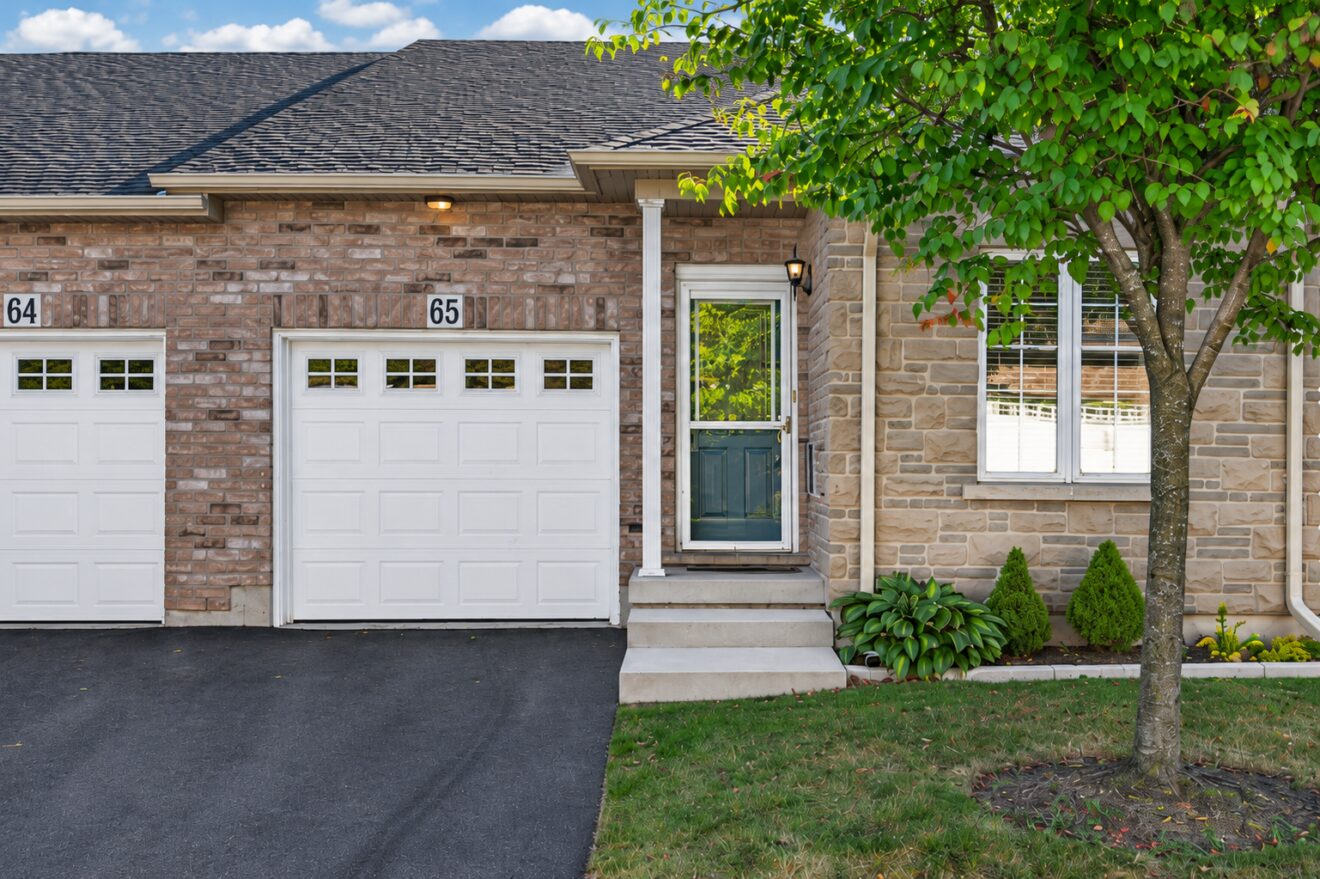
SOLD: 65-566 Southridge Drive, Hamilton – What This Bungaloft Sale Reveals About Selling in a Softer Market
Selling a home in a softer real estate market requires more than putting a property on the MLS and waiting for the right buyer.
When homes are taking longer to sell, buyers have more opportunities to compare properties, consider their options and negotiate. For sellers, that makes preparation, pricing, marketing and the ability to respond to market conditions especially important.
The O’Reilly Group’s recent sale of 65-566 Southridge Drive in Hamilton, a three-bedroom bungaloft condominium townhome built by local builder Starward, offers a useful example.
The property sold in just 29 days, compared with the approximately two-month average selling period that Luke O’Reilly, Founder & Broker of The O’Reilly Group at Royal LePage State Realty, was observing across the broader Hamilton residential market.
For O’Reilly, the result illustrates an important distinction: a slower market does not mean that every property will take months to sell. It does, however, mean that sellers need to approach the process with realistic expectations and a strategy suited to their particular home.
A Successful Home Sale Begins Before the Listing Goes Live
One of the most important decisions in selling a property often happens before the first photograph is taken.
At 65-566 Southridge Drive, the homeowners had already invested considerable effort in preparing their property for the market.
The interior had been freshly painted throughout, and the home had received a thorough deep cleaning. These improvements helped present the property as a well-maintained, move-in-ready home while allowing prospective buyers to envision how they might eventually personalize the interior.
‘The sellers had already taken their time and did a great job preparing the home for sale,’ O’Reilly explains. ‘They had the home freshly painted throughout and deep cleaned. It really gave the impression of a well-maintained bungaloft that was very much in move-in-ready condition, but could also act as a blank canvas for somebody looking to modernize cosmetically.’
That distinction matters.
Not every property needs an expensive renovation before being listed. In some circumstances, buyers may appreciate a home that is clean, well cared for and immediately functional, even if certain finishes reflect an earlier design style.
The objective is to make it easier for buyers to recognize the property’s existing value without becoming distracted by avoidable maintenance or presentation concerns.
‘I think, in person, the home made a very good impression when touring the property, especially compared to what else was currently available in the marketplace,’ O’Reilly says.
For sellers, the lesson is that thoughtful preparation can influence how a home competes against other listings, without necessarily requiring major capital improvements.
Why Bungaloft Townhomes Appeal to Buyers Seeking Low-Maintenance Living
Part of the appeal of 65-566 Southridge Drive was its floor plan.
Bungaloft-style condominium townhomes occupy an interesting position in the residential market. They offer many of the practical advantages of bungalow living while providing additional space on an upper level.
For buyers looking to simplify their living arrangements without moving into an apartment-style condominium, that combination can be particularly attractive.
‘Often with bungalow or bungaloft townhome condominiums in Hamilton, Ancaster, Burlington and Dundas, they’re appealing to retirees, empty nesters or somebody who’s looking for more of a turnkey lifestyle,’ O’Reilly explains.
At Southridge Drive, the main level provided the features many buyers prioritize when considering a transition away from a traditional two-storey detached home.
The primary bedroom and ensuite bathroom were located on the main floor, alongside a second bedroom, the principal living areas and laundry facilities. There were also only approximately two steps between the garage and the interior of the home.
This arrangement meant that residents could complete most everyday activities without regularly using stairs to reach an upper bedroom.
‘This particular property offered a bit of a hybrid,’ O’Reilly says. ‘You have essentially all of your main living amenities on one floor, which is something a lot of buyers are looking for, particularly when they’re considering their long-term needs.’
The upper level added another dimension.
A loft space, third bedroom and full bathroom provided additional flexibility for overnight guests, visiting family members or a separate living area.
‘A lot of buyers really appreciate that additional space when they’re entertaining houseguests or having people stay overnight for a weekend,’ O’Reilly explains. ‘It also provides some additional privacy because it’s on that upper level.’
The result was a property that offered the convenience of main-floor living without requiring its occupants to sacrifice the extra space they might still want.
The Appeal of Condominium Townhome Living
Beyond the floor plan, the condominium setting itself was another important consideration.
The home was situated within a well-maintained complex developed by Starward, a local builder that O’Reilly regards as having a strong reputation for quality and reliability.
For homeowners who no longer want the same level of exterior maintenance responsibility associated with a detached property, a condominium townhome can provide an appealing alternative.
‘If somebody’s priorities have shifted and they’re interested in travelling, focusing on family or pursuing their passions, they might not be as interested in maintaining the exterior of a home,’ O’Reilly says.
‘For somebody who’s not quite ready for an apartment-style condo, this type of property can be a great opportunity.’
The condominium arrangement can reduce certain maintenance responsibilities, although the precise division of responsibilities, associated fees and any restrictions depend on the condominium corporation’s governing documents.
The home also featured an unfinished basement, providing additional potential for buyers interested in expanding the usable living space in the future, subject to any necessary condominium approvals, municipal permits and applicable building requirements.
More from our blog!:
- Downsizing in Hamilton: Why the Right Next Home Starts With the Life You Want to Live
- Common Home Inspection Issues Sellers Face – And How to Get Ahead of Them Before Listing
- What Happens When You Receive an Offer on Your Home? A Seller’s Guide for Ancaster, Dundas, Hamilton & Burlington
How a Coordinated Selling Strategy Contributed to the Result
The O’Reilly Group worked closely with the homeowners to establish a selling strategy that considered the property’s condition, its likely buyer audience and the broader market environment.
With the home prepared for sale, the team implemented its marketing plan to introduce the listing to prospective purchasers.
But effective marketing is only one part of the process.
A property’s presentation and exposure must be considered alongside its pricing and the response it receives from buyers.
For O’Reilly, this is where ongoing evaluation becomes essential.
The strategy ultimately resulted in an accepted offer, followed by a brief conditional period. Once the conditions were fulfilled, the transaction became firm.
The property sold in 29 days.
That was notably shorter than the approximately two to three month Hamilton-area benchmark O’Reilly referenced during the sale.
It is important to recognize that the broader benchmark covers a range of residential property types and locations. It is not necessarily a direct comparison with bungaloft condominium townhomes in the same complex.
Nevertheless, the sale provides a practical example of how a carefully prepared property, supported by coordinated marketing and responsive decision-making, can find a buyer even when overall market conditions are challenging.
What Does This Sale Tell Us About the Hamilton Real Estate Market?
A single successful sale does not establish a market-wide trend.
But individual transactions can reveal how buyers and sellers are responding to the conditions around them.
At the time of this sale, the Hamilton market was experiencing more subdued conditions than in previous years. Buyers generally had more opportunities to compare available properties, while sellers faced greater pressure to ensure their homes were competitively positioned.
According to the Cornerstone Association of REALTORS®’ third-quarter 2026 market statistics, townhouse and row properties across its Hamilton–Burlington reporting area had 4.2 months of inventory at the end of the quarter.
That broader context makes the Southridge Drive transaction particularly relevant to homeowners considering a move.
‘Even though the statistics are showing us that we’re in a softer real estate market, where there’s been some downward pressure on pricing and average days on market are higher than in previous periods, it’s still possible to sell,’ O’Reilly explains.
‘We’ve helped many sellers throughout this year. The last two years have been extremely busy for us, which demonstrates that even in softer markets, sellers are still able to move along with their plans.’
The important qualification is that not every home will attract the same level of interest or sell within the same timeframe.
Different property types, locations, conditions, price ranges and competitive circumstances can produce very different outcomes, even within the same city.
Why Property-Specific Market Analysis Matters
One of the mistakes sellers can make is relying too heavily on a single market statistic.
Average selling times and city-wide pricing trends are useful for understanding the general direction of the market. They do not necessarily tell a homeowner how their particular property is likely to perform.
A bungaloft condominium on Hamilton‘s West Mountain, for example, serves a different set of housing needs than a detached family home in Westdale or a downtown apartment condominium.
The buyer audiences, competing inventory and factors influencing value can all differ.
For O’Reilly, that is why an effective selling strategy begins with a property-specific evaluation rather than a generalized prediction.
‘There are certain factors we take into consideration when we’re evaluating the overall strategy, but all we can do is look at what we’ve got in front of us at that exact moment and try to come up with the best strategy possible,’ he says.
That means examining current competition, comparable sales, the property’s condition, its likely buyer audience and the sellers’ objectives.
It also means acknowledging that the strategy may need to evolve as the market responds.
Can You Still Sell Your Home Quickly in a Softer Market?
Yes. Homes can still sell relatively quickly in softer market conditions, but the outcome depends on several factors, including pricing, presentation, competition, buyer demand and marketing execution.
The sale of 65-566 Southridge Drive illustrates that possibility, but it should not be interpreted as a guarantee that other properties will achieve similar results.
O’Reilly emphasizes that sellers also need to consider circumstances beyond anyone’s control.
‘If something unexpected happens out there, whether it’s a local, national or international factor that has a direct impact on the real estate market, that’s always a risk,’ he explains.
‘It’s not guaranteed that a home will sell in just under a month like this particular home did. It has to be evaluated on a case-by-case basis, and there are a variety of factors that can impact a successful sale.’
That perspective is particularly relevant for homeowners who are coordinating a sale with another purchase, retirement plans, relocation or a significant lifestyle transition.
A realistic selling strategy should account for both the desired outcome and the possibility that the process may take longer than anticipated.
The Broader Lesson for Hamilton Homeowners Considering a Sale
For homeowners contemplating a move, the sale of 65-566 Southridge Drive offers three practical lessons.
First, preparation matters. A clean, well-maintained property can make a positive impression without necessarily requiring extensive renovations.
Second, understanding the property’s buyer audience helps shape how it should be positioned. In this case, the combination of main-floor living, additional guest accommodations and condominium ownership created a distinctive lifestyle offering.
Third, selling successfully requires ongoing evaluation. Market conditions, buyer feedback and competing inventory should inform decisions throughout the listing period.
The goal is not simply to sell quickly. It is to establish a strategy that reflects the sellers’ circumstances and gives the property a reasonable opportunity to achieve a successful outcome.
As O’Reilly explains, homeowners considering a sale benefit from ‘sitting down with an expert, evaluating the entire picture and then getting a realistic snapshot of what they can expect moving forward.’
For those considering selling a bungalow, bungaloft, condominium townhome or detached property in Hamilton, The O’Reilly Group can help evaluate the property’s market position, discuss preparation priorities and develop a selling strategy based on current conditions and individual objectives.
Luke O’Reilly & The O’Reilly Group is a member of Royal LePage Canada’s ‘National Chairman’s Club’, recognizing The O’Reilly Group as one of Canada’s top-performing real estate teams.
Frequently Asked Questions About Selling a Home in Hamilton
1. Can you still sell a home quickly in Hamilton’s current real estate market?
Yes. Even in a softer real estate market, homes can sell relatively quickly when they are competitively positioned and appeal to the right buyers.
The sale of 65-566 Southridge Drive, which sold in 29 days, is one example.
However, Luke O’Reilly emphasizes that selling timelines depend on the individual property.
‘It’s not guaranteed that a home will sell in just under a month like this particular home did. It has to be evaluated on a case-by-case basis.’
2. How important is pricing when selling a home in a slower market?
Pricing is one of the most important components of a successful selling strategy, particularly when buyers have more properties to choose from.
An effective pricing strategy considers recent comparable sales, current competing listings, property condition, location and buyer demand.
O’Reilly cautions against relying exclusively on broader market statistics. A property’s value and likely selling timeline must be evaluated within its specific competitive market.
3. Should I renovate my home before selling it?
Not necessarily. Some of the most effective improvements are relatively straightforward, including fresh paint, deep cleaning, minor repairs and decluttering.
At 65-566 Southridge Drive, the homeowners had freshly painted the interior and thoroughly cleaned the property before listing.
According to O’Reilly, these preparations helped create the impression of a well-maintained, move-in-ready home while allowing prospective buyers to envision their own cosmetic updates.
The decision to undertake more expensive renovations should depend on the property’s condition, buyer expectations and the likelihood of recovering the investment.
4. What makes a bungaloft condominium townhome attractive to downsizers?
Bungaloft townhomes can offer the convenience of main-floor living while preserving additional space for guests, hobbies or family visits.
At Southridge Drive, the main floor included the primary bedroom, ensuite bathroom, second bedroom, laundry facilities and principal living areas. An upper loft, third bedroom and full bathroom provided additional flexibility.
For buyers looking to reduce exterior maintenance responsibilities without transitioning to an apartment-style condominium, this arrangement can be appealing.
5. How long should I expect my Hamilton home to take to sell?
There is no single selling timeline that applies to every Hamilton property.
The number of days required to sell can vary considerably depending on neighbourhood, property type, asking price, condition, competing inventory and market conditions.
While 65-566 Southridge Drive sold in 29 days, that result should not be treated as a prediction for other properties.
Homeowners should review recent comparable sales and current competition to establish realistic expectations.
6. What is the biggest mistake homeowners make when selling in a softer market?
One potential mistake is assuming that the same selling strategy will work for every property.
A detached home, condominium apartment and bungaloft townhome may appeal to different buyers and face different competitive conditions, even within the same neighbourhood.
O’Reilly emphasizes the importance of evaluating the entire situation before developing a strategy.
‘All we can do is look at what we’ve got in front of us at that exact moment and try to come up with the best strategy possible.’
That approach also requires monitoring buyer activity and remaining prepared to respond when circumstances change.
7. What should I do first if I’m considering selling my home in Hamilton?
Begin with a property-specific market evaluation.
This should include an assessment of the home’s condition, recent comparable sales, competing listings, likely buyer audience and your personal selling objectives.
The goal is to understand not only what your property may be worth, but also what preparation, marketing and pricing decisions could help support a successful sale.
As O’Reilly explains, homeowners benefit from ‘sitting down with an expert, evaluating the entire picture and then getting a realistic snapshot of what they can expect moving forward.’

We're On Your Side
Whether you’re selling or buying the O’Reilly Group is dedicated to elevating your real estate experience.